Stunningly Bonkers, ‘The Laskett’ a Gift to Horticulture With Love.
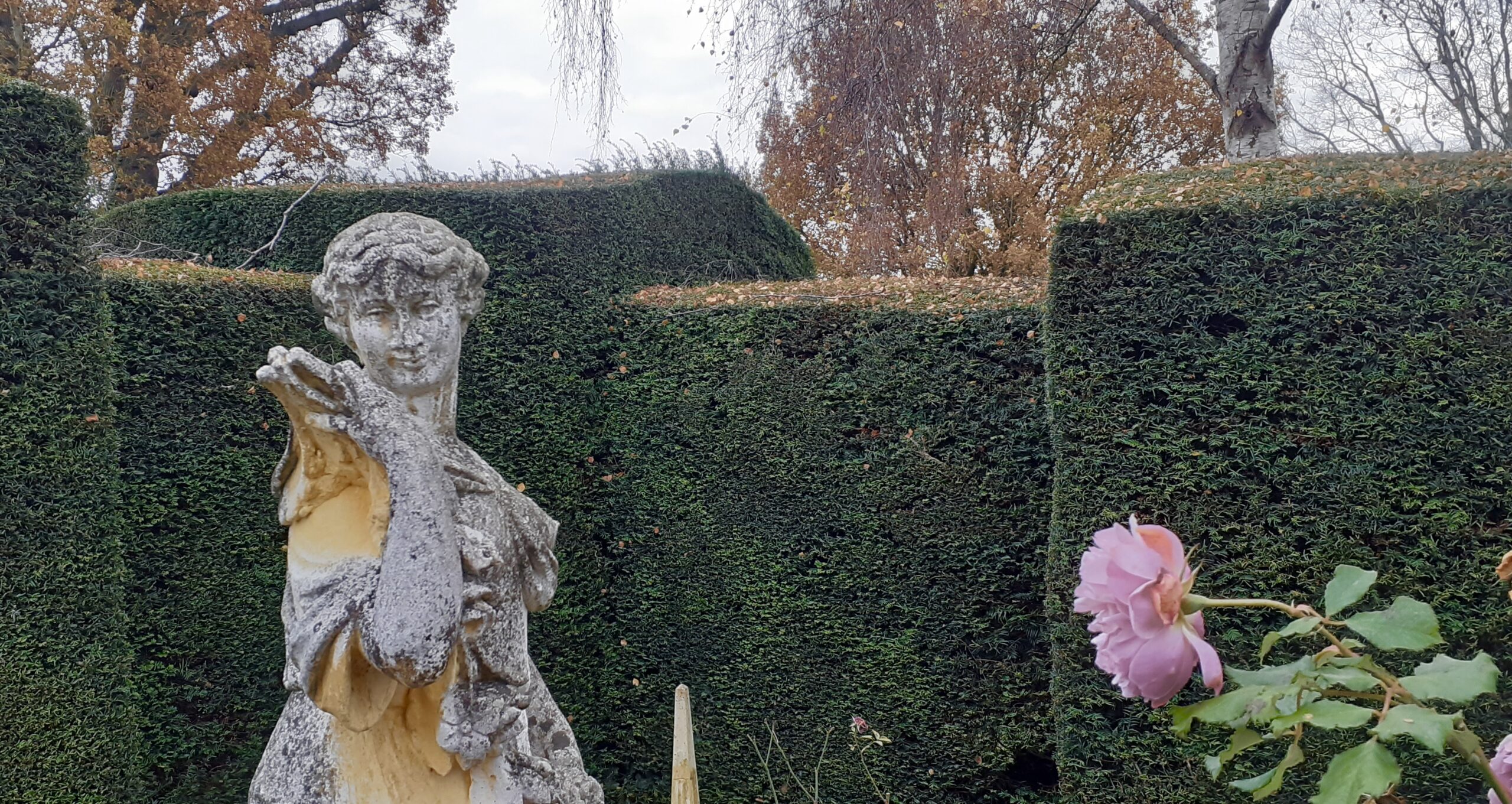
It’s a chill overcast day in late November. I’m exploring The Laskett Garden the Herefordshire. I’m walking on a short gravel path somewhere between The Diamond Jubilee Urn and The Shakespeare Monument and I’m suddenly struck by the thought that for the first time in an hour of exploring this wondrous garden I am not totally enraptured. There is nothing absolutely extraordinary to see here, in a garden of wonders this is just ordinary! This is so noticeable that it makes me realise just what fun I’d been having. I didn’t need to worry. I’m soon back in a garden wonderland this time on the twisting Serpentine Walk on my way to the V & A Temple.

The Laskett effortlessly reflects the personality of its creators. Julia Trevlyan Oman and her husband Sir Roy Strong moved here in 1974 and in an empty 4 acre field began realising their gardening dreams. The result is a truly great garden. It is self-confident and erudite, playful and eclectic, packed with symbolism and ideas. Strongly classical in its conception the garden is a series of garden rooms. In late November, with little in flower, the formal, and freshly trimmed, hedges bordering each area come to the fore. The gardens structure, hard and soft landscaping, displays a perfect understanding of scale, proportion and the use of use of focal points. Each corner turned provides an enticing new vista. Each path taken offers tantalising options and opportunities to explore. Statues and artwork appear as both focal points and unexpected surprises. The Laskett may be stunningly bonkers (and I can give a garden no higher praise) but it is a masterpiece of design principal. There is one over riding impression however. Be it the oft repeating initials of its creators, classical referencing through statuary and artwork or monuments to long departed pets this is a garden that is a homage to love.
Very sadly Julia Trevelyan Oman died in 2003. Sir Roy Strong, still very much alive, left the house and garden in 2020. In an act of huge generosity Sir Roy gifted the garden to the charity organisation Perennial, the Gardeners Royal Benevolent Society. It is this huge act of beneficence which brings me to The Laskett. I’ve been very kindly invited by Perennial to find out about the garden and learn about the Perennial charity, its plans for the garden and its hopes for the future.

The Gardeners Benevolent Institution was founded in 1839 and granted a Royal appellation in 1851.Since 2000 it has supported not just gardeners but everyone working in, or retired from, the horticultural industry. The wider base of those supported led to the name change to Perennial in 2003. It’s a clever and necessary rebranding but in truth Perennial has yet to cut through in terms of public recognition. Partly this is due to competition from other charities. But it also partly our own fault. The image of those working in the industry is of people who feel happy and privileged. We feel it ourselves and think we are the last people who need to ask for help. We are wrong.
The consequences of Illness and injury both physical and mental can be devastating. The financial problems caused by inability to work or possibly insufficient wages cannot be underestimated. Often through pride we don’t like to admit that we need help. Sometimes we don’t even know that there is somewhere there to help. There is. Perennial provide free and confidential advice, wide ranging support and financial help for all those eligible for assistance and their families.
Covid saw gardens and green space transported to the very heart of public sensibilities. For those working in horticulture there were opportunities for sure. But to add to a difficult time the pressure of extra responsibilities and customer expectations for many has been a burden too much. The services Perennial provide have never been more needed.
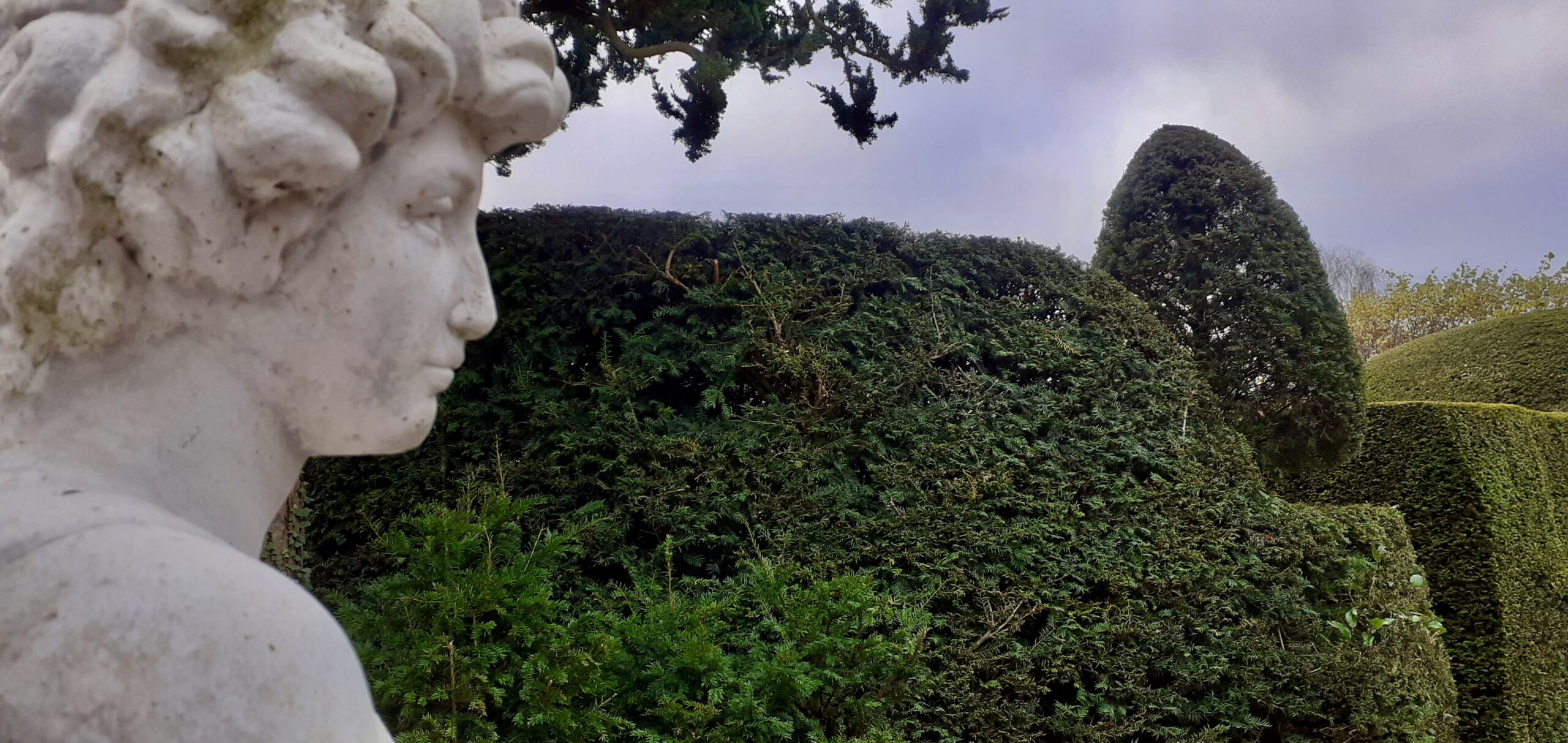
Perennials plans for The Laskett are two-fold. Firstly they are now the custodians of one of Britains great gardens. The gardens must be protected and maintained, honour the creators vision but still move forward. Just how to make the gardens even more spectacular is going to be an huge challenge for the new creative team. As a self sustaining attraction a new cafe and shop will need to be incorporated into the main house. Visitors will need to be attracted. Special events and exhibitions added to the calendar. Secondly The Laskett, together with a growing assemblage of other gardens will be used to publicise and promote Perennial itself. Name recognition and public awareness are the lifeblood in the competition for the charity dollar. Perennial also owns and runs the magnificent York Gate garden in Leeds and the newly acquired Fullers Mill in Suffolk. They must become a name synonymous with these gardens and establish a reputation for competency.
I will forever be thankful to Perennial for introducing me to this spectacular garden. The Perennial management team has a big job on. Luckily it is full of talented and conscientious people. Will they be able to fully realise all their ambitious plans for The Laskett? Carrying the responsibility of honouring the legacy of the gardens creators and managing the finances responsibly could will be a task requiring the intelligence and foresight of an ancient deity. I’m not classically trained enough to be sure precisely which God but there’s probably a statute of them somewhere at The Laskett.